
(click images to see larger ones)
Lane Cove National Park Wildflowers
Smaller Floral Families
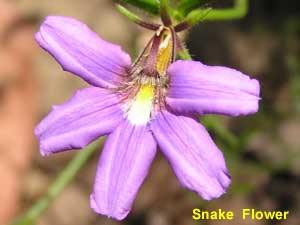 Snake Flower
This set of wildflowers is "simply" those that belong to smaller floral families - of which there are over 100 families with over 340 species in the Park.
The largest family is the sedges (Family CYPERACEAE) with 35 species, followed by grasses (Family POACEAE) with 31 species. However, this website doesn't cover these families - yet.
The next most prolific are the daisies (Family ASTERACEAE) with 25 species.
Index to our collection -
Other attractions of the Lane Cove National Park
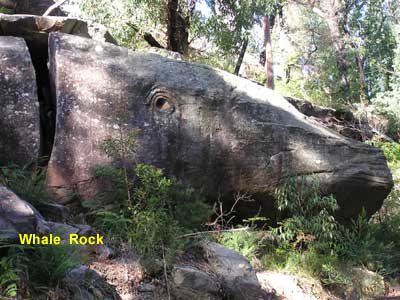
The Hawkesbury Sandstone formation was also known as Lizard Rock, but Whale Rock is now the accepted name.
Family GOODENIACEAE
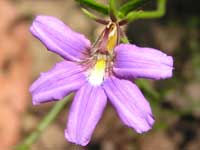
Snake Flower
Scaevola ramosissima
Small summer flowering climber with distinctive flowers and leaves.
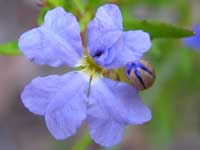
Blue Dampiera
Dampiera stricta
Tiny blue flowers on a small plant - flowering most of the year, but best in spring.
Also see our Blue Dampiera web page.
Also see our Blue Dampiera web page.
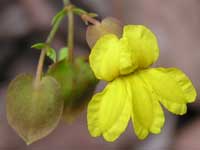
Velleia lyrata
Its lyre shaped bracts provide both its name and its key distinguishing feature. It is an uncommon species.
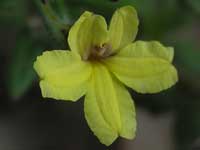
Variable-leaved Goodenia
Goodenia heterophylla
Flowering from early spring, its leaves, although variable, are similar. The flower is about 10mm square.
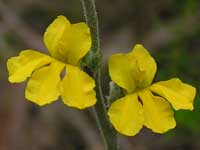
Daisy-leaved Goodenia
Goodenia bellidifolia
Distinguished from the other members of the Goodenia genus by the lack of leaves on the flower stem.
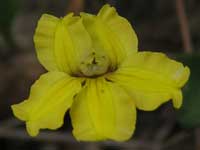
Ivy Goodenia
Goodenia hederacea
Also known as the Violet-leaved Goodenia, it is best identified by the flower stem coming from a rosette of leaves. It grows along the ground.
Family POLYGALACEAE
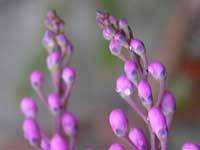
Matchheads
Comesperma ericinum
A tall leggy shrub over a metre high. Its mauve flowers appear in spring.
Also known as Pyramid Flower, Pink Matchheads and Heath Milkwort.
Also known as Pyramid Flower, Pink Matchheads and Heath Milkwort.
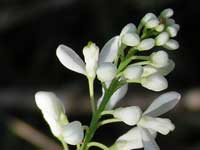
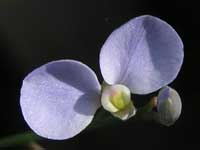
Broom Milkwort
Comesperma sphaerocarpum
Also a member of the Comesperma genus, this fragile little plant has no leaves. The "wing-span" of the flower is barely 10mm.
Family CUNONIACEAE
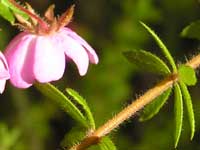
River Rose
Bauera rubioides
Also known as the Dog Rose, its pink flowers hanging down and its six leaves radiating from the stem identifies it.
Flowering in spring and summer, it prefers sheltered damp embankments.
Here's another image.
Flowering in spring and summer, it prefers sheltered damp embankments.
Here's another image.
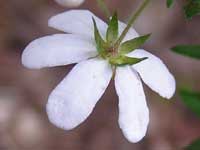
River Rose (white variant)
Bauera rubioides
As the flowers of this plant are similar in size to the pink version (15mm wide), it isn't the much smaller Bauera microphylla whose flowers are less than 8mm wide.
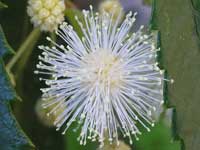
Black Wattle
Callicoma serratifolia
With flowers that resemble some of those of the acacia family, this beautiful tree grows over 10 metres high along watercourses.
It flowers in spring.
It flowers in spring.
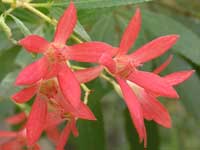
NSW Christmas Bush
Ceratopetalum gummiferum
Distinguished at any time by its trifoliate jagged leaves, it bursts into colour in summer. Up to 5 metres high, it is a Christmas joy.
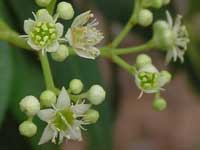
NSW Christmas Bush
Ceratopetalum gummiferum
However, the NSW Christmas Bush produces white flowers. Its sepals turn to red in fruit.
Its 25mm diameter flowers are twice that of its sibling (the Coachwood).
Its 25mm diameter flowers are twice that of its sibling (the Coachwood).
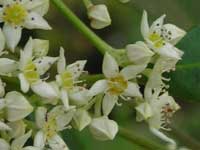
Coachwood
Ceratopetalum apetalum
Once you can identify it - by its grey bark with white mottles, or its flowers in summer, - you will see this 20 metres tall tree in stands along the creeks of the Park.
It was used in early coach making, WWII .303 rifle butts and for the frame of the Mosquito fighter-bomber (an all wood construction!).
It was used in early coach making, WWII .303 rifle butts and for the frame of the Mosquito fighter-bomber (an all wood construction!).
Family APIACEAE
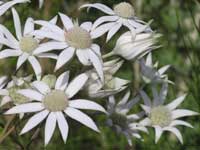
Sydney Flannel Flower
Actinotus helianthi
White drifts on the sandstone ridges in spring.
Its flowers are about 50mm wide.
Also see our Flannel Flowers web page.
Its flowers are about 50mm wide.
Also see our Flannel Flowers web page.
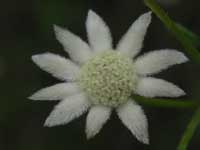
Lesser Flannel Flower
Actinotus minor
A small plant with flowers up to 12mm across. Like its siblings, it doesn't have petals, the petal-like part are bracts.
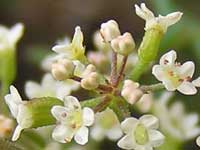
Heathy Platysace
Platysace ericoides
A low bush with leggy stems whose leaves are 5mm long, 1mm wide and pointed. The flower heads are at the end of the stems and have both male and female flowers.
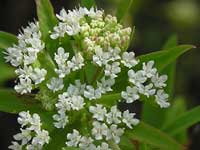
Native Parsnip
Platysace lanceolata
Also known as Scrubby Platysace, the flower head of this summer flowering shrub is about 25mm across.
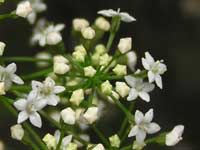
Carrot Tops
Platysace linearifolia
Flowering in late summer, Carrot Tops is best identified by the bouquet of tiny (3mm across) flowers at the end of a long and oblique stalk.
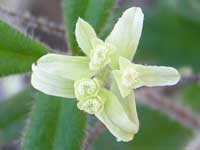
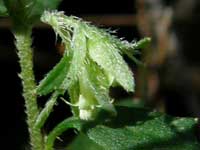
Rock Xanthosia
Xanthosia tridentata
A delightful little plant whose leaves have three tips. The autumn flowers droop and are hidden by the hairy bracts.
Family PITTOSPORACEAE
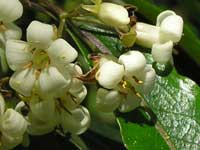
Sweet Pittosporum
Pittosporum undulatum
A tree to about 8 metres in height, it has scores of white flowers in spring which progress to orange coloured berries by autumn.
Also see our Sweet Pittosporum web-page.
Also see our Sweet Pittosporum web-page.
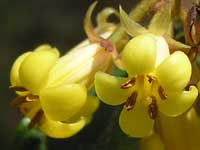
Rough-fruit Pittosporum
Pittosporum revolutum
Its yellow flowers and dull leaves distinguish it from the Sweet Pittosporum (to the left).
It is also known as Wild Yellow Jasmine.
It is also known as Wild Yellow Jasmine.
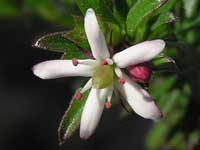
White Marianth
Rhytidosporum procumbens
A small plant whose flowers are only 8mm wide. It is also known as Mary's Flower.
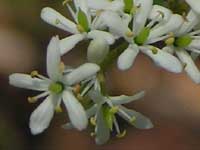
Blackthorn
Bursaria spinosa
The thorns of this summer flowering tree become branchlets which bear the flowers.
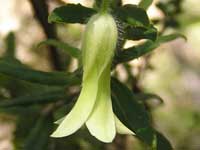
Apple Berry
Billardiera scandens
Flowering in spring its 20mm flowers become purple edible fruit. This climber is also known as Dumplings.
Family EUPHORBIACEAE
The Euphorbiaceae family has recently been divided into four. The families are :
- Euphorbiaceae (Ricinocarpos genus)
- Phyllanthaceae (includes Phyllanthus and Poranthera genera)
- Picrodendraceae (Micrantheum genus)
- Putranjivaceae.
See NSW Flora Online for more details.
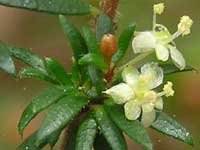
Heath Micrantheum
Micrantheum ericoides
A tiny shrub that can be identified by its trifoliate leaves. Its male flowers have three anthers.
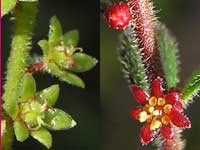
Thyme Spurge
Phyllanthus hirtellus
A small shrub whose shiny and hairy leaves are about 6mm long, and are often bent at the tip.
The variety that has red male flowers (shown here) only occurs in Sydney's north.
The variety that has red male flowers (shown here) only occurs in Sydney's north.
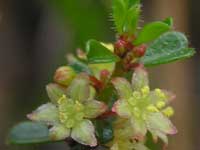
Thyme Spurge
Phyllanthus hirtellus
This image shows the cream male flower.
The Thyme Spurge is supposedly monoecious, but I have yet to find a plant that has both male and female flowers.
The Thyme Spurge is supposedly monoecious, but I have yet to find a plant that has both male and female flowers.
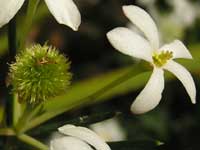
Wedding Bush
Ricinocarpos pinifolius
This spring flowering shrub produces
female flowers followed by male flowers. The green ball on the above thumbnail image is the fruit.
The flowers are around 15mm wide.
The flowers are around 15mm wide.
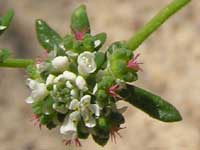
Heath-leaved Poranthera
Poranthera ericifolia
A small plant to about 30cm high, whose flower-heads are held at the end of long branching stems. Its recurved shiny leaves are about 12-15mm in length.
Family ASTERACEAE (Daisies)
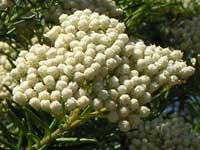
Ball Everlasting
Ozothamnus diosmifolius
Also called Rice Flower, Sago Bush and White Dogwood. This spring flowering shrub grows to over 2 metres in height. It is very similar to the Bent Cassinia (Cassinia uncata).
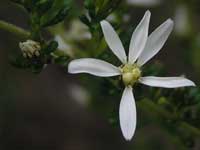
Bridal Daisy Bush
Olearia microphylla
A show of white 10mm flowers in early spring. Its leaves are tiny.
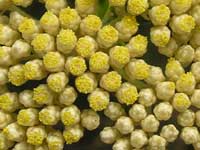
Stiff Cassinia
Cassinia denticulata
Identified from other members of the Cassinia genus by its shiny green toothed leaves that are recurved and are white underneath (see larger image). The leaves are typically 10mm long and 4mm wide.
Family LOBELIACEAE
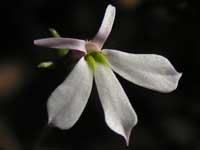
White Root
Pratia purpurascens
A small plant whose flowers are about 10mm long. Besides its lobelia like flower, it is easily identified by the pale purple undersurface of its older leaves.
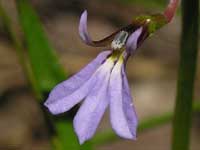
Angled Lobelia
Lobelia alata
Pretty little flowers, barely 5mm wide, appearing singly on leggy stems. The leaves have two opposite bumps (glands?) half way along.
See the Angel Sword on our Blue Mountains Wildflowers web page.
See the Angel Sword on our Blue Mountains Wildflowers web page.
Family LOGANIACEAE
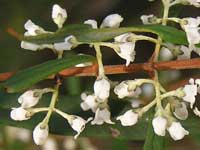
Narrow-leaf Logania
Logania albiflora
Recognised by its sweet smelling white flowers on grey stalks that come from leaf joints.
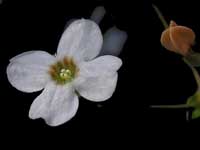
Varied Mitrewort
Mitrasacme polymorpha
These flowers are less than 10mm wide. The orange flower bud is shaped like a bishop's hat - which is called a mitre - thus its name.
Family RANUNCULACEAE
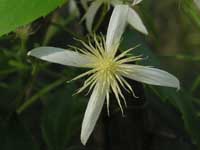
Austral Clematis
Clematis aristata
Another stunningly symmetrical flower in close up. This climber is distinguished from the Forest Clematis by its "toothed" leaves and the long
appendage on its anthers. It flowers in spring.
It is also known as Traveller's Joy.
It is also known as Traveller's Joy.
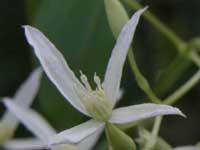
Forest Clematis
Clematis glycinoides var. glycinoides
Also known as Headache Vine, it is identified by its smooth edged leaves and the short appendage on its anthers.
Flowering in late winter, its 25mm wide flowers appear earlier than the Austral Clematis.
Flowering in late winter, its 25mm wide flowers appear earlier than the Austral Clematis.
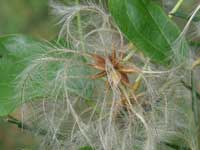
Forest Clematis
Clematis glycinoides var. glycinoides
The seeds of the Clematis are stunning.
This is an image of the Forest Clematis showing the dozen or so achenes (1 seeded fruit) each with a long wispy tail.
This is an image of the Forest Clematis showing the dozen or so achenes (1 seeded fruit) each with a long wispy tail.
Family RHAMNACEAE
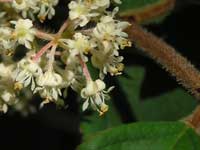
Rusty Pomaderris
Pomaderris ferruginea
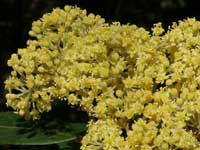
The members of the Pomaderris genus are difficult to distinguish - the leaves and the flower colour provide the vital clues. The dark brown hairy branches assist identify this species.
Family DROSERACEAE (Sundews)
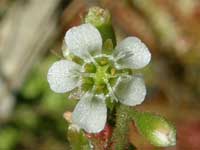
Common Sundew
Drosera spatulata
Its flowers are around 7mm wide. It is also called the Rosy Sundew as its flowers are occasionally pink.
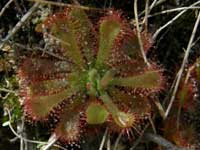
Common Sundew (leaves)
Drosera spatulata
Best identified by its 15mm long spatula shaped leaves - and thus its botanical name. One of the most common sundews, it is found in eastern
Australia, New Zealand and east Asia.
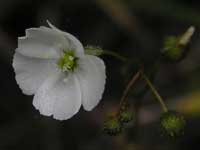
Pale Sundew
Drosera peltata
A tiny flower, barely 10mm across, adorns this carnivorous plant. Distinguished from Drosera auriculata (Tall Sundew) by its hairy sepals.
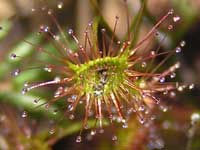
Pale Sundew (leaves)
Drosera peltata
The drops at the ends of its leaves are sticky. The "tentacles" close up over any unwary insect. The entire leaf is 10 mm across; the centre 4mm.
Even Smaller Families
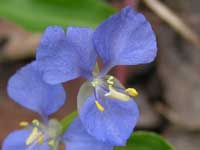
Scurvy Weed
Commelina cyanea
Family COMMELINACEAE
This native plant is similar to "Trad", but its distinctive blue flowers identifies it.
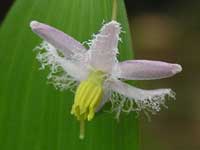
Wombat Berry
Eustrephus latifolius
Family PHILESIACEAE
The enlarged image shows the 1cm orange berries of this climbing plant. The Wombat Berry is the only species in the genus.
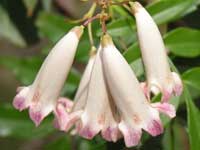
Wonga Wonga Vine
Pandorea pandorana
Family BIGNONIACEAE
A spring flowering climber, the bell shaped flowers are 20mm long and 10mm wide.
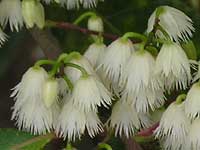
Blueberry Ash
Elaeocarpus reticulatus
Family ELAEOCARPACEAE
Best known for its blueberry like fruit - see large image. The delightful flowers provide another name for the tree - Fairy Petticoats.
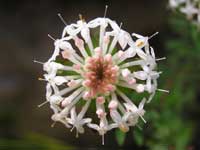
Slender Rice Flower
Pimelea linifolia
Family THYMELACEAE
Its 3cm wide flowers are glorious in close up.
The Royal Botanic Gardens' PlantNET database warns that it is "toxic to stock".
Also known as Granny's Bonnet.
The Royal Botanic Gardens' PlantNET database warns that it is "toxic to stock".
Also known as Granny's Bonnet.
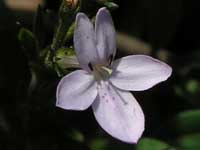
Pastel Flower
Pseuderanthemum variabile
Family ACANTHACEAE
An unmistakable flower - this one had its photo taken from the top, so it is effectively upside-down. The 15mm flowers appear in summer.
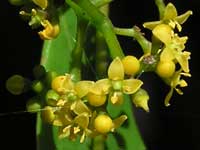
Water Vine
Cissus hypoglauca
Family VITACEAE
Also known as the native grape, the yellow flowers appear in summer.
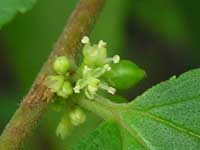
Native Peach
Trema tomentosa
Family ULMACEAE
Also known as the Poison Peach as it is toxic to stock.
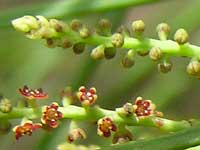
Acid Drops
Leptomeria acida
Family SANTALACEAE
Also known as the Native Currant, the 5mm wide green grape like fruit is shown in the enlarged image. The shrub is broom-like.
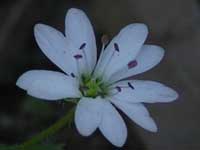
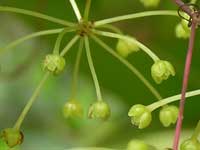
Native Sarsaparilla
Smilax glyciphylla
Family SMILACACEAE
Also known as Sweet Sarsaparilla, this climber is identified by the three veins on its leaves. Its tiny flowers become black berries that are about 7mm across.
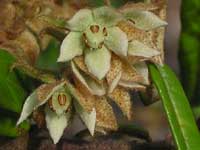
Rusty Petals
Lasiopetalum ferrugineum var. ferrugineum
Family STERCULIACEAE
Stunning flowers in close up - which look like a piece of fruit that has been partially cut into slices. Also known as the Rusty Velvet-bush.
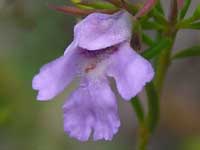
Narrow-leaved Hemigenia
Hemigenia purpurea
Family LAMIACEAE
A small spring flowering plant that's also known as the Common Hemigenia. Similar to members of the Prostanthera genus but distinguished by its leaves. The flowers are about 10mm "square".
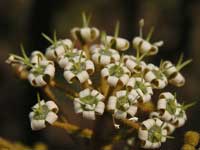
Long-leaf Star-hair
Astrotricha longifolia
Family ARALIACEAE
Glorious in close up, each flower is 3mm wide. The erect shrub can be over 2 metres tall.
It is a member of the Araliaceae Family which includes the ivy and ginseng.
It is a member of the Araliaceae Family which includes the ivy and ginseng.
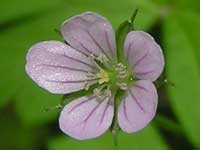
Northern Cranesbill
Geranium homeanum
Family GERANIACEAE
A small flower, in pairs (sibling not shown here). It has a distinctive geranium leaf.
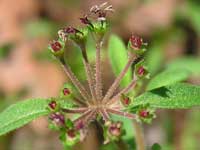
Pomax
Pomax umbellata
Family RUBIACEAE
This is the only species in this genera.
The flower arrangement, produced in spring, has 8-12 stalks, each of which has several flowers. The fruit is retained long after flowering.
The flower arrangement, produced in spring, has 8-12 stalks, each of which has several flowers. The fruit is retained long after flowering.
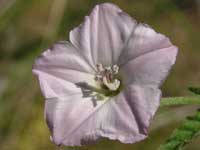
Australian Bindweed
Convolvulus erubescens
Family CONVOLVULACEAE
This spring flowering climber is 15mm wide and is also known as Blushing Bindweed.
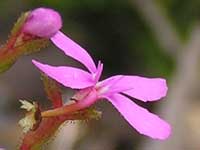
Trigger Plant
Stylidium productum
Family STYLIDIACEAE
The hammer-like trigger is used to shower any insect that lands on the flower with pollen. Distinguished from similar species by its aerial stems. The flower is about 15mm in length.
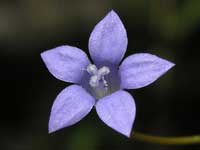
Australian Bluebell
Wahlenbergia gracilis
Family CAMPANULACEAE
Its tiny flowers (6mm across) distinguish it from its siblings.
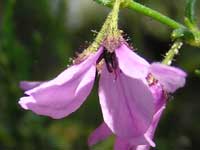
Glandular Pink-bell
Tetratheca glandulosa
Family ELAEOCARPACEAE
This species is classified as "vulnerable", and is best identified by its "hairy" sepals and stem.
The species of this genus are referred to as Black-eyed Susans.
The species of this genus are referred to as Black-eyed Susans.
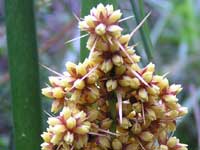
Spiny-headed Mat Rush
Lomandra longifolia
Family XANTHORRHOEACEAE
Also known as Honey Reed, both its thorns and leaves can inflict pain. Very hardy and flowers in spring.
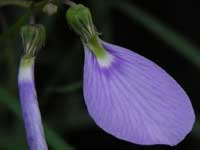
Slender Violet-bush
Hybanthus monopetalus
Family VIOLACEAE
The genus is called Spade Flowers. This species is also known as Lady's Slipper, and its multiple flowers on each stem, distinguishes it from H.
vernonii.
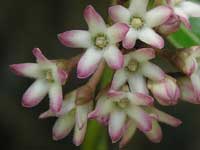
Scented Marsdenia
Marsdenia suaveolens
Family APOCYNACEAE
Also called Scented Milk Vine, this summer flowering climber is distinguished by its white flowers - the other species are mainly yellow.
[The pink edges on the petals provides me with some doubt to its identity.]
[The pink edges on the petals provides me with some doubt to its identity.]

Copyright © 2026 Waratah Software
ABN 76 425 202 457
ABN 76 425 202 457