
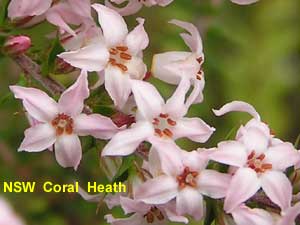
 NSW Coral Heath
A principal factor in identifying Guinea Flowers is the number and position of their stamens and carpels. For example the Blue Mountains Guinea Flower has about 16 yellow stamens and two green carpels.
The Family Epacridaceae (Southern Heaths) have recently been absorbed into the Family Ericaceae (Northern Heaths).
Northern Heaths includes Rhododendrons and Azaleas.
Index to our collection -
|
Family Rutaceae
Common Correa Hairy Zieria Pale Pink Boronia Pinnate Boronia Stiff Boronia Sandfly Zieria Sydney Boronia Toothed Phebalium |
|
Guinea Flowers
Blue Mountains Guinea Flower Bundled Guinea Flower Golden Guinea Flower Rough Guinea Flower Showy Guinea Flower Twining Guinea Flower |
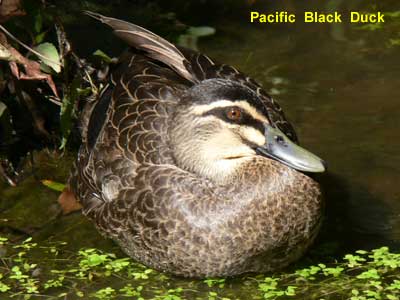
◊ the Australian Wood Duck
◊ Black Swan
◊ Eurasian Coot
◊ White-faced Heron.
Images of these birds are shown on our Birds web page.
The principal watercourse in the Park is the Lane Cove River. It flows into the Parramatta River at Greenwich Point. The Parramatta River "becomes" Port Jackson (Sydney Harbour).
Tributaries of the Lane Cove River in the Park include Terrys Creek and Devlins Creek.
Boronias - as with other members of the family, the fragrance comes from the oil in the leaves.
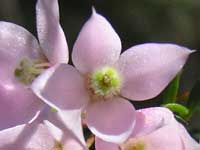
Pale Pink Boronia
Boronia floribunda
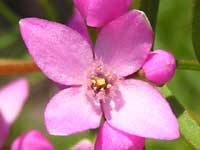
Pinnate Boronia
Boronia pinnata
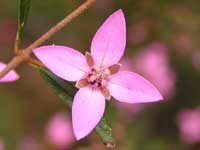
Sydney Boronia
Boronia ledifolia
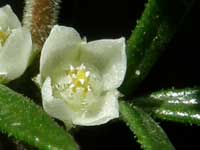
Stiff Boronia
Boronia rigens
Its trifoliate leaves are up to 10mm long and its flowers, which seemed to be in bud for ages, are less than 5mm across.
Zierias - distinguished from Boronias by their 4 stamens - Boronias have 8.
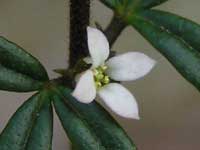
Hairy Zieria
Zieria pilosa
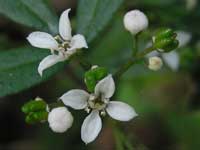
Sandfly Zieria
Zieria smithii
Other Rutaceae family members
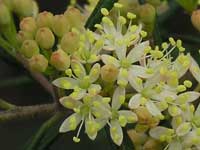
Toothed Phebalium
Leionema dentatum
Its flowers are 10mm across.
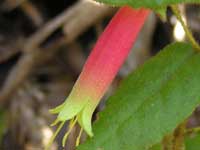
Common Correa
Correa reflexa var. reflexa
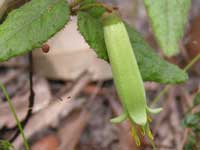
Common Correa (green variant)
Correa reflexa var. reflexa
Guinea Flowers - genera Hibbertia, family Dilleniaceae
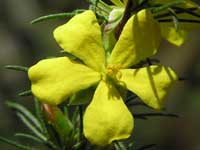
Bundled Guinea Flower
Hibbertia fasciculata
It is a small shrub whose flowers are about 8mm wide, and leaves about 6mm in length.
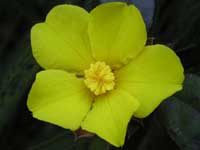
Golden Guinea Flower
Hibbertia scandens
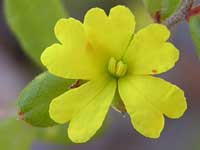
Rough Guinea Flower
Hibbertia aspera
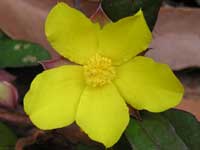
Twining Guinea Flower
Hibbertia dentata
It is distinguished from the Golden Guinea Flower by its slightly "teethed" leaves - and thus its botanical name.
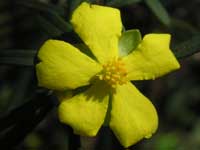
Showy Guinea Flower
Hibbertia linearis
It is a medium sized shrub and flowers in spring.
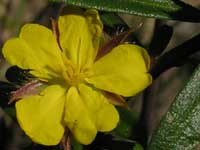
Blue Mountains Guinea Flower
Hibbertia bracteata
Epacris genus
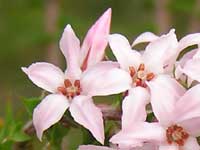
NSW Coral Heath
Epacris pulchella
Here's another image.
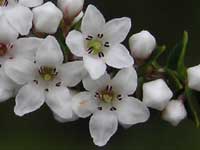
Coral Heath
Epacris microphylla
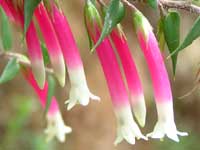
Native Fuchsia
Epacris longiflora
It is also known as the Fuchsia Heath.
Leucopogon genus
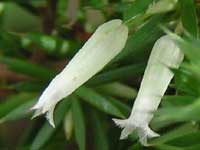
Prickly Bearded Heath
Leucopogon juniperinus
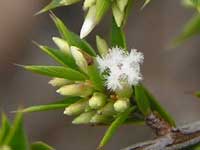
Leucopogon appressus
Leucopogon appressus
It flowers in late summer into autumn.
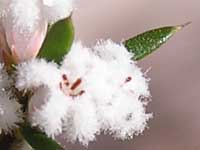
Pink Bearded Heath
Leucopogon ericoides
It flowers in late winter, its fuzzy tiny flowers are less than 5mm wide. It is differentiated from others in the genus by its leaves and its flowers not having the translucency of L. juniperinus.
Here's another image.
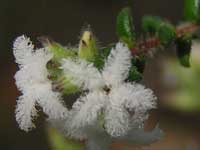
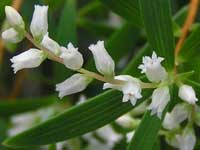
Lance Beard-heath
Leucopogon lanceolatus
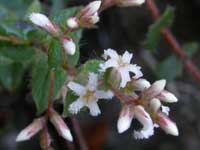
White Beard
Leucopogon amplexicaulis
The 5mm wide flowers appear in late winter.
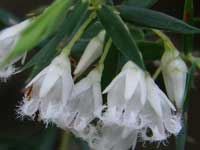
Leucopogon setiger
Leucopogon setiger
Flowering in late winter, it is an uncommon species in the Park.
Styphelia genus
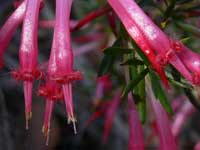
Red Five Corners
Styphelia tubiflora
Here's another image.
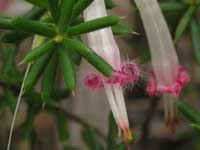
Red Five Corners (clear variant)
Styphelia tubiflora
other Heath genera
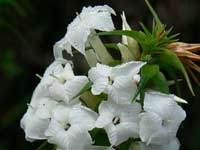
Snow Wreath
Woollsia pungens
Also recognised by the ripples on its petals.
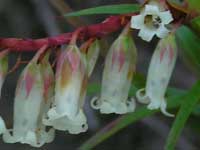
Necklace Heath
Dracophyllum secundum
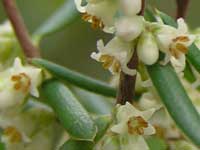
Prickly Broom Heath
Monotoca scoparia
.
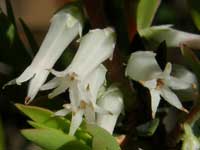
Daphne Heath
Brachyloma daphnoides
