Greater Periwinkle pa070016 image 63KB
Weeds
of the
Lane Cove National Park
Waratah Software logo 13sep09 home - contact us - about this

To return to
Lane Cove National Park Wildflowers
index

attractive aliens or just plain weeds ?

Yes several of these plants have incredibly beautiful flowers. But their colour and form
aren't the issue here - they are invasive and crowd out the local native plants.
Several are Weeds of National Significance, and they all diminish our rich flora diversity.

Reference to these plants can be found on PlantNet and Weeds in Australia.

An index to the weeds included below.
Balloon Vine
Black-eyed Susan
Blue Morning Glory
Blue Pigroot
Bridal Creeper
Calliopsis
Dolichos Pea
Greater Periwinkle
Japanese Honeysuckle
Lantana
Mistflower
Mother of Millions
Parrot Lily
Pink Pavonia
Scotch Thistle
Soursob
Trad (Wandering Jew)
Winter Senna

Other attractions of the Lane Cove National Park

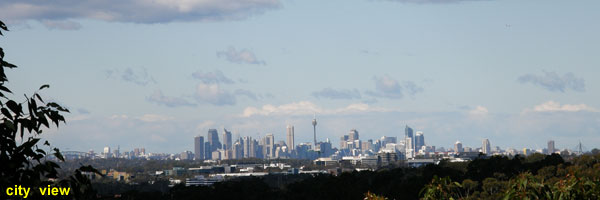
city view image 92KB


There are several city view lookouts in the Park. The one pictured here is in Thornleigh. Another is at the end of the Pennant Hills Fire Trail before it descends to the Lane Cover River.

The Thornleigh City View Lookout is accessed from Thornleigh Oval. Go straight ahead from the turn-off to the Lorna Pass Walking Track (see Acacias webpage) and follow the signs.

The walk is reasonably flat heath with an amazing display of wildflowers in spring.

The weeds

Select the thumbnail image to see the full image.

Balloon Vine image p4210410 73KB
Balloon Vine
Cardiospermum grandiflorum
Native of the tropics.
Declared a noxious weed by many Sydney Councils, Balloon Vine's massive entangling vines smother other plants by blocking out the sunlight.
Its name comes from its seed pod (fruit) which looks like a paper balloon, and produces. It is highly invasive.
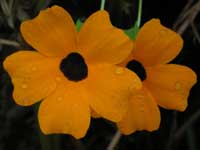
Black-eyed Susan image p5190074 68KB
Black-eyed Susan
Thunbergia alata
Native of southern Africa.
Black-eyed Susan is not on the weeds register and is used in gardens where quick cover is required.
This reference gives a "home-town" aspect to this perennial creeper.
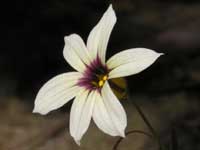
Blue Pigroot image pb180141 55KB
Blue Pigroot
Sisyrinchium iridifolium
Native of South America.
One of the more attractive weeds, Blue Pigroot is a member of the Iris family.
More of an attractive alien than an invasive weed.
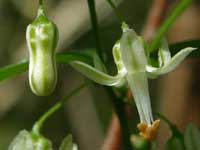
Bridal Creeper image p8190138 66KB
Bridal Creeper
Asparagus asparagoides
Native of South Africa.
Bridal Creeper is one the twenty Weeds of National Significance.
A detailed description can be found on the Weeds in Australia database.
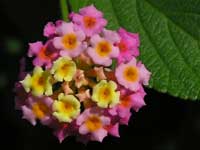
Lantana image p4210432 73KB
Lantana
Lantana camara
Native of the tropics.
Lantana is another of the twenty Weeds of National Significance.
A detailed description can be found on the Weeds in Australia database.
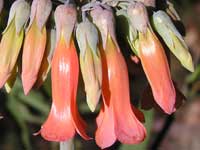
Mother of Millions image p6180109 119KB
Mother of Millions
Bryophyllum delagoense
Native of South Africa and Madagascar.
Mother of Millions was a runner-up in assessing the twenty Weeds of National Significance and is a declared a noxious weed.
A detailed description can be found on the Weeds in Australia database.
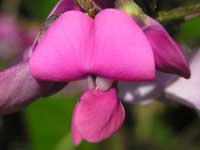
Dolichos Pea image pa070002 66KB
Dolichos Pea
Dipogon lignosus
Native of South Africa.
A climbing pea, that could easily be mistaken for a native.
A description can be found on the Victorian Dept. of Primary Industries website.
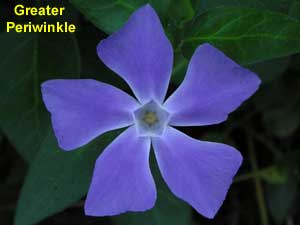
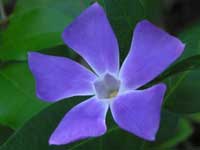
Greater Periwinkle image pa070012 83KB
Greater Periwinkle
Vinca major
Native of the Mediterranean.
Found in many gardens, this attractive alien is a known escapee.
A full description can be found in the Weeds Australia database.
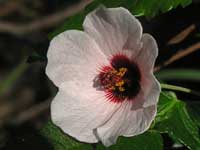
Pink Pavonia image p4120412 104KB
Pink Pavonia
Pavonia hastata
Native of South America.
A member of the Malvaceae Family that also includes Hibiscus and Cotton.
The characteristic leaves identify this small shrub when it is not in flower.
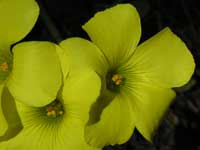
Soursob image p7280036 65KB
Soursob
Oxalis pes-caprae
Native of South Africa.
All introduced Oxalis species and varieties are declared noxious weeds in NSW.
Soursob, also known as Bermuda Buttercup, occurs in all states and territories of Australia.
A full description is provided here.
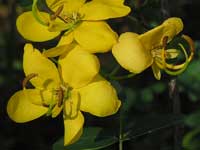
Winter Senna image p4120418 89KB
Winter Senna
Senna pendula var. glabrata
Native of South America.
Declared a noxious weed by several Sydney Councils, this leggy shrub can be over 3 metres high. The Senna genus was previously included in the Cassia genus - this plant was called Cassia coluteoides. This is why it is sometimes referred to as a Cassia.
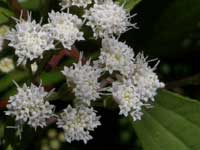
Mistflower image p9090335 100KB
Mistflower
Ageratina riparia
Native of Central and
South America.
Declared a noxious weed by many NSW Councils, this member of the Daisy Family (Asteraceae) grows rapidly next to sheltered creeks and waterways.
A detailed description can be found on the Weeds in Australia database.
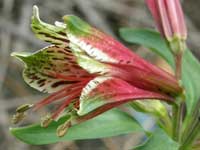
Parrot Lily image pc200490 102KB
Parrot Lily
Alstroemeria pulchella
Native of Brazil.
The Alstroemeria genus is commonly called the Peruvian Lily - although all species come from either Brazil or Chile.
Once established, this perennial is very difficult to eradicate.
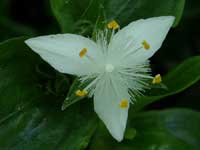
Trad (Wandering Jew) image p9200172 63KB
Trad (Wandering Jew)
Tradescantia fluminensis
Native of South America.
This creeper was previously known as T. albiflora, and is very similar to the Australian native Scurvy Weed (Commelina cyanea). Scurvy Weed has blue flowers and pointier leaves.
A detailed description can be found on the Weeds in Australia database.
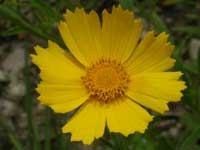
Calliopsis image pc010016 76KB
Calliopsis
Coreopsis lanceolata
Native of North America.
A member of the Daisy family, this annual is also known as Coreopsis and as Tickseed - due to the shape of its seed.
A detailed description can be found on the Blue Mountains Weeds database.
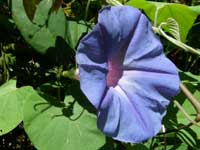
Blue Morning Glory image pc190390 138KB
Blue Morning Glory
Ipomoea indica
Native of South America.
A smothering creeper, it is also known as Purple Morning Glory and Dunny Creeper.
It is a declared noxious weed in over a dozen Sydney Council areas.
A detailed description can be found on the Weeds in Australia database.
It is differentiated from I. purpurea by its longer sepals.
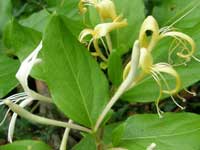
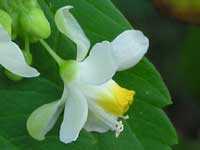
Japanese Honeysuckle image pc200452 112KB
Japanese Honeysuckle
Lonicera japonica
Native of Japan, Korea & China.
This hardy climber has a sweet fragrance.
Its flowers bloom white and become pale orange before withering.
A detailed description can be found on the Weeds in Australia database.
Scotch Thistle image pc300222 104KB
Scotch Thistle
Onopordum acanthium
Native of Europe & western Asia.
Scotland's floral emblem, a detailed description of this prickly customer can be found on the Weeds in Australia database.