(click images to see larger ones)
Lane Cove National Park Wildflowers
Pea Flowers, Orchids, Lilies & Irises
Families Fabaceae, Orchidaceae, Liliaceae* & Iridaceae
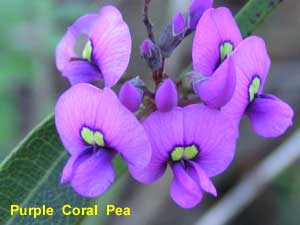
Purple Coral Pea
With over 1,100 species, the
Pea Flower family is one of the largest in Australia.
There are about 1,000 species of Orchids in Australia and as many as 35,000 species worldwide - making it the world's largest flower family.
* Most of the Australian species in the Liliaceae Family have recently been reclassified into a dozen or so other botanical families.
The Iris family is represented throughout the world by freesias, gladiolis and irises - and in Australia by the Genus
Patersonia.
Index to our collection -
Other attractions of the Lane Cove National Park
The
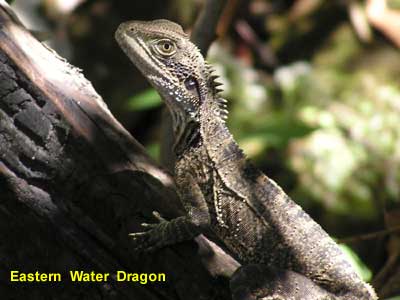
Eastern Water Dragon is one of sixteen kinds of snakes and lizards that live in the Park.
Other lizards include the Southern Leaf-tailed Gecko and the Copper-tailed and Eastern Water Skinks.
The Eastern Water Dragon to the right appears a little skinny - this is because it is early October, and she has only recently emerged from hibernation.
[I have assumed it is a "she" as the males are red on their chests - like Spike.]
Eastern Water Dragons are found along the coastal watercourses of Eastern Australia.
To escape a threat, they will plunge into the water. So if you hear a splash while walking near a creek in the Park, it may be an Eastern Water Dragon.
Our Collection
Pea Flowers - Family Fabaceae
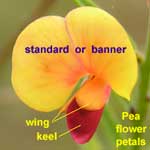
Pea flowers have five petals -
- the standard or banner
- two wings
- two petals that are usually fused together and referred to as the keel.
Bossiaea genus
Spiny Bossiaea
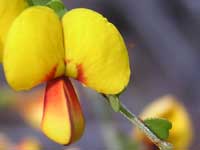
Bossiaea obcordata
This pea flower is characterised by its sharp branches (spines), and heart shaped leaves. Flowers in spring.
Broom Bossiaea
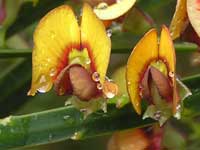
Bossiaea scolopendria
A virtually leafless plant with characteristic flat stems. Similar to
B. ensata (see our
Blue Mountains peaflowers, but
B. scolopendria has reddish wings and the flowers are larger.
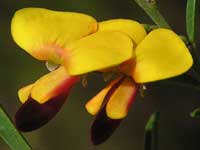
Variable Bossiaea
Bossiaea heterophylla
Flowering in Autumn, this, plus its variable leaves and crimson keel identify it.
The leaves vary on the plant and may be ovate or thin, and also vary in size.
Dillwynia genus
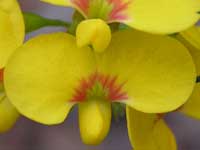
Heathy Parrot Pea
Dillwynia retorta ssp. retorta
Probably the most common peaflower in the Park, and although flowering in winter and spring, there are invariably "spot flowers" throughout the year.
Its twisted perpendicular narrow
leaves helps identify it. The leaves aren't hard.
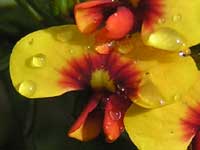
Rough Parrot Pea
Dillwynia rudis
Dillwynias typically have broad standards, and keels that are shorter than the wings.
The Rough Parrot Pea (a name not in common use) is identified by its 15mm long
rough leaves with the Dillwynian channel on top.
Hovea genus
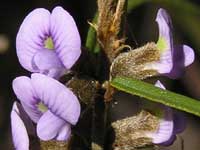
Common Hovea
Hovea linearis
Flowering in late winter, this beautiful pea flower is also known as the Erect Hovea or Blue Bonnet. The latter being a delightful name.
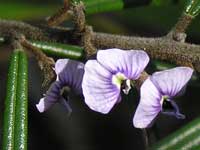
Rusty Pods
Hovea longifolia
While the Common Hovea is a small shrub to 50cm in height, Rusty pods is a small tree and can be over 2 metres high. It also has longer, shinier and darker green leaves.
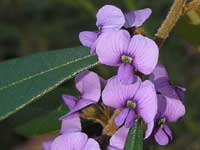
Pointed Leaf Hovea
Hovea acutifolia
Distinguished from the Hoveas to the left by its wider leaf, it is also known as the Northern Hovea.
Pultenaea genus - Bush Peas
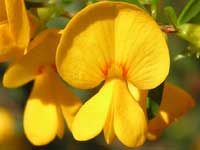
Graceful Bush-pea
Pultenaea flexilis
A mass of deep yellow flowers in spring. Its height (up to 4 metres) and flat pointed, occasionally concave, leaves identify it.
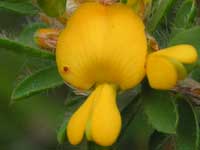
Hairy Bush Pea
Pultenaea villosa
Identified by its green keel and hairy concave leaves. Similar to
P. hispidula however
P. villosa's leaves if not
concolourous (of uniform colour) then the lower surface is darker than the upper surface - vice versa for
P. hispidula.
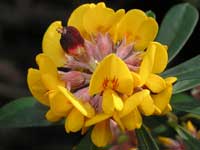
Large-leaf Bush Pea
Pultenaea daphnoides
A beautiful rosette of flowers - about 30mm across. Its leaves are 30mm in length. Besides its size, it can also be identified by the crimson "keel" under each flower - see flower on the right.
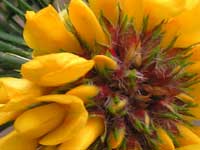
Fine-leaf Bush Pea
Pultenaea stipularis
A 2 metre high shrub with a crown of golden pea flowers. Identified by its 1 cm long
stipules (a small leafy growth at the base of a leaf) - see enlarged image.
Gompholobium genus - Golden Glory Peas
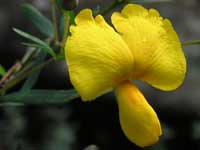
Broad-leaf Wedge Pea
Gompholobium latifolium
Spring flowers that are 30mm from top to bottom. Distinguished from similar Wedge Peas by the trifoliate
broad flat leaves.
Also known as the Golden Glory Pea.
Other Pea Flower Genera
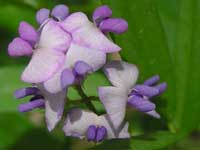
Love Creeper
Glycine clandestina
This widespread climber is found in all eastern states. Its narrow long leaves helps identify it.
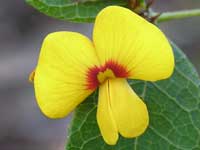
Handsome Flat-Pea
Platylobium formosum
The opposite heart shaped veined leaves identifies this spring flowering pea flower.
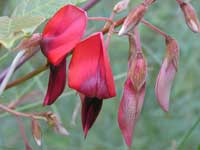
Dusky Coral Pea
Kennedia rubicunda
A robust climber that produces exquisite crimson pea flowers in spring.
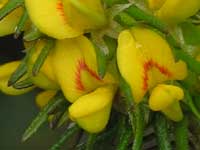
Heath Phyllota
Phyllota phylicoides
Phyllotas can be recognised by their long bracteoles - the leaf-like bract under the flower.
Flowering in Spring, its broader bracteoles distinguishes it from the Summer flowering Phyllota grandiflora.
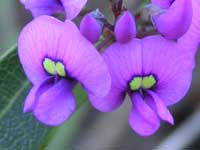
Purple Coral Pea
Hardenbergia violacea
Flowering in early spring, this magic climber has several cultivars - "
Happy
Wanderer" being one.
Also known as the False Sarsparilla.
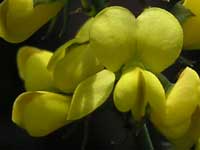
Leafless Globe-pea
Sphaerolobium minus
Differentiated from S. vimineum by its shorter wings that expose its keel, and having only a hint of red on some flowers, and none on most.
The flowers are barely 5mm wide and long.
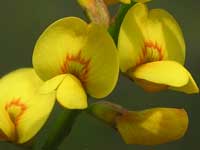
Golden Spray
Viminaria juncea
It is also known as Native Broom - and this describes it well. This leggy leafless shrub grows to several metres, and is spring flowering.
It is the only species in the Viminaria genus.
Orchids - Family Orchidaceae
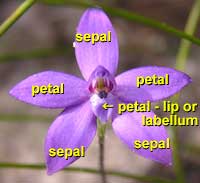
Although Orchids vary greatly in form, colour and size, their flowers are composed of 6 segments.
The outer 3 segments are the sepals; and inner three segments are the petals.
The third petal becoming a lip or labellum.
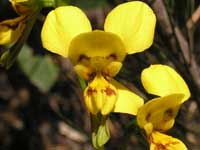
Golden Donkey Orchid
Diuris aurea
Donkey Orchids are easily recognised by their donkey ear-like petals with two leg-like sepals below.
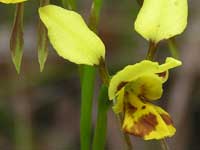
Tiger Orchid
Diuris sulphurea
This spring flowering Donkey Orchid is 30mm from the top of its petals to the bottom of its sepals. A key in its identification is the lack of a callus on its labellum.
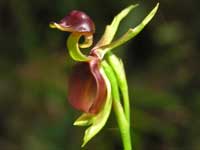
Large Duck Orchid
Caleana major
Resembling a duck in flight, this small orchid's labellum snaps shut against the column trapping the visiting insect and turning it into a pollinator - see the full image.
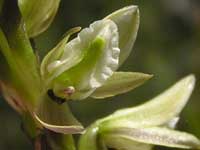
Tall Leek Orchid
Prasophyllum elatum
Also known as the Piano Orchid, this orchid occurs in all other Australian States except the North Territory. It can be identified by its long leaf stem.
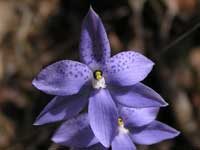
Spotted Sun Orchid
Thelymitra ixioides var. ixioides
Also known as the Blue Sun Orchid, it has dark blue dots on its upper three segments. The flower is 25mm wide, but needs a sunny day to open.
It is best identified by the finger like
papillae as not all Spotted Sun Orchids have spots as this
image shows.
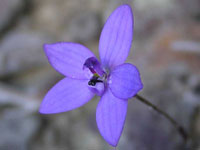
Small Waxlip Orchid
Glossodia minor
A small orchid that is 20mm wide. The flower stem is leafless - the leaf leaving the stem near the ground.
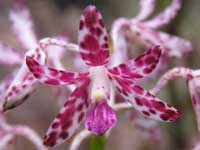
Splotched Hyacinth Orchid
Dipodium variegatum
Summer flowering, its green stem and dotted
ovary* differentiates it from the other Hyacinth Orchids found in the Sydney Region -
D. punctatum and
D. roseum.
[
* The ovary is at the top of the stem immediately
below where the sepals and petals meet.]
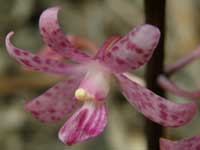
Rosy Hyacinth Orchid
Dipodium roseum
Identified by its purple stem, curled back segment tips and lines on its labellum.
Its
ovary is striped.
The orchid is 30mm across.
Here's another
image.
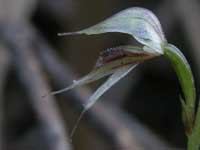
Pixie Orchid
Acianthus fornicatus
A tiny orchid well hidden by is mute colours and shady locations. Also known as Pixie Caps, its
basal leaf helps locate and identify it.
Pterostylis genus (Greenhoods)
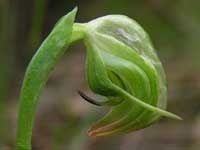
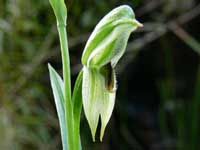
Nodding Greenhood
Pterostylis nutans
Flowering in winter, this translucent green orchid stays "drooped". The flower is 20mm long.
Tall Greenhood
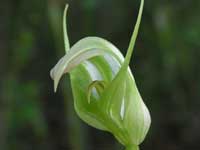
Pterostylis longifolia
Characterised by its long leaves and the multiple flowers on each stem.
Sharp Greenhood
Pterostylis acuminata
Also known as the Pointed Greenhood after its pointed labellum. It flowers in Autumn with a single flower at the end of each stem - the stem has a rosette
of leaves at its base.
Calochilus genus (Beard Orchids)
Purplish Beard Orchid
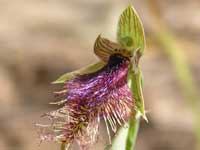
Calochilus robertsonii
Spring flowering, its thick purple beard at the top of the labellum differentiates it from the other Beard Orchids.
Copper Beard Orchid
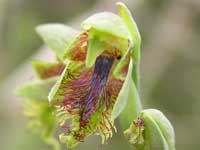
Calochilus campestris
Spring flowering, the Copper Beard Orchid is identified by the two blue plates on its labellum.
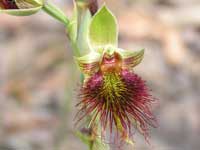
Red Beardie
Calochilus paludosus
The lack of "eye-like" glands at the base of the labellum distinguishes this Beard Orchid from its siblings.
Caladenia genus (Fairy Orchids, Lady's Fingers and Spider Orchids)
As far as I can ascertain -
- C. carnea's labellum lobe doesn't protrude, its labellum tip is yellow and it tends to be pinker.
- C. fuscata's labellum lobe protrudes and its labellum tip is white, and it is smaller.
- C. catenata's labellum is far more vertical before it slopes forward.
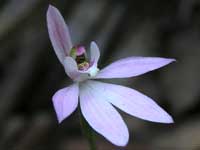
Pink Fingers
Caladenia carnea
A small orchid that is 20-30mm across whose colour varies from near white to dark pink.
Here is an
image showing its distinguishing characteristics.
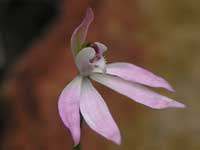
Dusky Fingers
Caladenia fuscata
Flowering in early Spring, Dusky Fingers' sepals and petals are less than 7mm long.
Here is an
image showing its distinguishing characteristics.
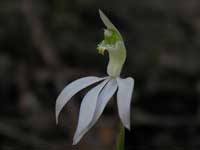
White Fingers
Caladenia catenata
This attractive orchid is 25mm wide and flowers in winter and early spring.
Cryptostylis genus (Tongue Orchids)
There are 5 species of the Cryptostylis genus in Australia - two of which can be found in the Park.
They can be identified when not in flower by a single leaf protruding from the ground.
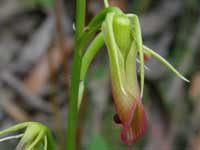
Large Tongue Orchid
Cryptostylis subulata
A distinctive orchid identified by its drooping crimson tipped curled tongue-like labellum. The labellum, which is 25mm in length, has a dark red bump
on its lower back.
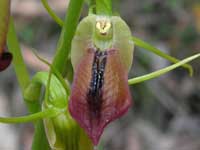
Large Tongue Orchid
Cryptostylis subulata
This is the reverse side of the flower.
Initially it had me thinking it was a different species until the penny dropped ....
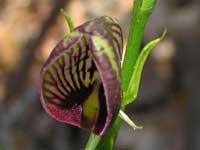
Hooded Orchid
Cryptostylis erecta
This orchid is all labellum. The other petals and the sepals looking more like leaves.
It is also known as the Bonnet Orchid and the Tartan Tongue Orchid.
Lilies
Most of the Australian species in the Liliaceae Family have recently been reclassified into a dozen or so other botanical families. Their new family is included in the their description.
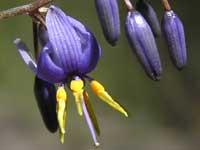
Blue Flax Lily
Dianella caerulea var. producta
[Family PHORMIACEAE]
The most common Blue Flax Lily in the Park, distinguished from Dianella caerulea var. caerulea by its leaves and flower coming from along the stem.
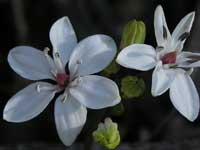
Milkmaids
Burchardia umbellata
[Family COLCHICACEAE]
With a 15mm wingspan, the spring flowering lily has a sweet fragrance.
Here's another
image.
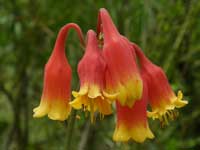
Christmas Bells
Blandfordia nobilis
[Family BLANDFORDIACEAE]
A truly beautiful lily. Flowers in late spring and summer. The flower is about 4cm long.
It has a green erect three sided
seed pod
that is around 4cm in length.
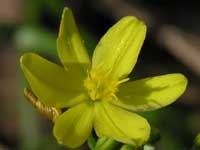
Yellow Rush-lily
Tricoryne simplex
[Family ANTHERICACEAE]
A delightful spring flowering lily that's 15-20mm wide. The twisted flower after flowering readily identifies it.
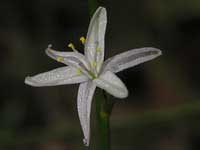
Pale Grass-lily
Caesia parviflora
[Family ANTHERICACEAE]
Another lily that is stunning in close-up. The distinctive lily-type flower is about 12mm wide and bears three fine purple stripes on each petal.
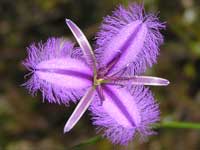
Rush Fringe Lily
Thysanotus juncifolius
[Family ANTHERICACEAE]
This species of the easily recognised fringe lily is identified by its lack of basal leaves and the striate stems. It is about 25mm across and only lasts a day.
Also known as the Branching Fringe Lily.
Irises - Family Iridaceae
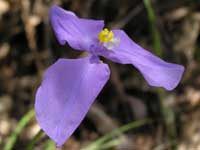
Leafy Purple Flag
Patersonia glabrata
Flowering for barely a day, the 50mm flowers of the Purple Flags can be from light blue to dark purple.
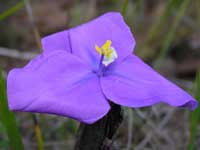
Silky Purple Flag
Patersonia sericea
The leaves of the Silky Purple Flag are fan like and come from the ground; while the Leafy Purple Flag's leaves and flower stork are borne on a stem.

Copyright © 2026 Waratah Software
ABN 76 425 202 457