
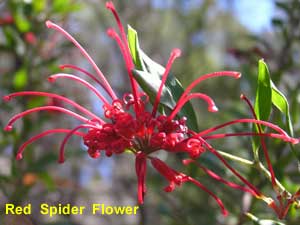
 Red Spider Flower
Although the Family Proteaceae is "only" the fifth largest of the Australia flora in terms of the number of species, it boasts some of the most popular and well known - including the Waratah and Old Man Banksia.
The Grevillea genus, with over 350 species, is the third largest genus - after Acacia and Eucalyptus.
Many of the species below are very prolific in the Park.
|
Banksias
Fern-leaved Banksia Hairpin Banksia Heath Banksia Old Man Banksia Silver Banksia Grevilleas Grey Spider Flower Pink Spider Flower Red Spider Flower White Spider Flower |
|
Geebungs
Broad-leaved Geebung Lance Leaf Geebung Narrow-leaved Geebung Pine-leaved Geebung Hakeas Blacknose Bushy Needlebush Dagger Hakea Finger Hakea Hairy Hakea Willow-leaved Hakea |
|
Other genera
Broad-leaf Drumsticks Conesticks Long Leaf Smoke Bush Mountain Devil Narrow-leaf Drumsticks NSW Waratah |

Beginning and ending at Pennant Hills Park this 5 km loop takes in open heath, woodland and rainforest.
Some advice on the walk -
◊ It is best to walk in a clockwise direction as the track leading down to the Lane Cove River is very steep.
◊ There are some causeways that may be awash after heavy rain.
◊ Look out for "over enthusiastic" bicycle riders.
Having said all that, the walk is marvellous and most of the photos on these web-pages were taken on this track or on its many arteries. So take time and seek out the many floral delights on offer.
Banksias - also see our Banksias web page.
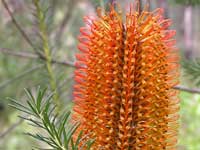
Heath Banksia
Banksia ericifolia
See also our Heath Banksia web page.
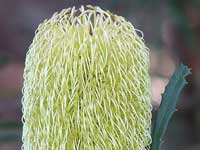
Silver Banksia
Banksia marginata
See also our Silver Banksia web page.
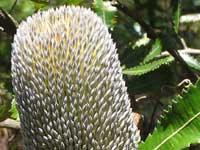
Old Man Banksia
Banksia serrata
See also our Old Man Banksia web page.
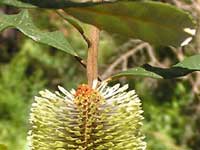
Fern-leaved Banksia
Banksia oblongifolia
See also our Fern-leaved Banksia web page.
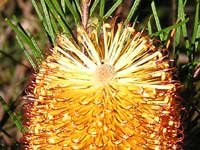
Hairpin Banksia
Banksia spinulosa
See also our Hairpin Banksia web page.
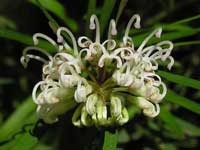
White Spider Flower
Grevillea linearifolia
Its slender long leaves helps identify it.
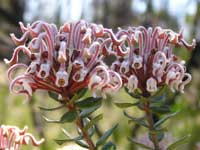
Grey Spider Flower
Grevillea buxifolia
Here's another image that shows its leaves.
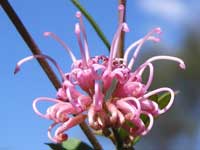
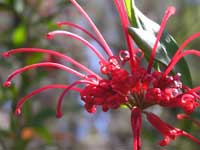
Red Spider Flower
Grevillea speciosa
Here's another image that shows its leaves.
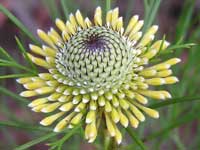
Narrow-leaf Drumsticks
Isopogon anethifolius
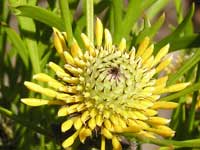
Broad-leaf Drumsticks
Isopogon anemonifolius
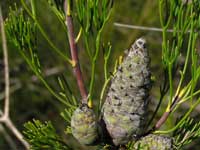
Conesticks
Petrophile pulchella
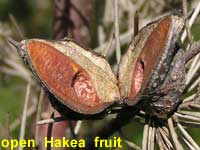
There are about 150 species of Hakea - all endemic to Australia.
Their distinctive woody fruit (seed capsule) distinguishes them from the Grevillea genus. The fruit of the Hakea does not open until the branch supporting it dies.
An image of the fruit can be shown by clicking the word "fruit" in the respective text.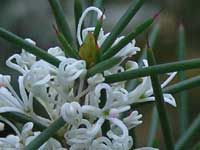
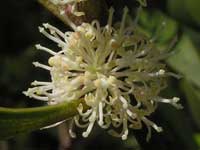
Bushy Needlebush
Hakea sericea
Finger Hakea
Hakea dactyloides
The fruit does not have horns.
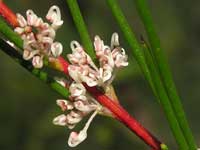
Blacknose
Hakea propinqua
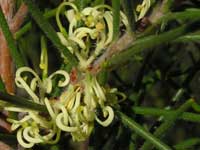
Hairy Hakea
Hakea gibbosa
Also known as the Rock Hakea.
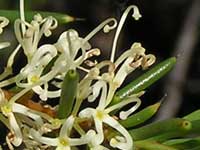
Dagger Hakea
Hakea teretifolia
It flowers in Summer.
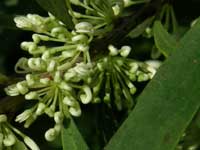
Willow-leaved Hakea
Hakea salicifolia ssp. salicifolia
The leaves of ssp. salicifolia are >7 mm wide; whereas ssp. angustifolia's leaves are < 7mm.
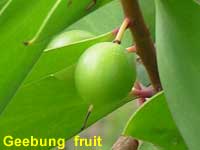
There are about 100 species of geebungs - all endemic to Australia.
Their distinctive bright yellow flowers and green grape like fruit helps identify them from other plants.
The word Geebung has been long immortalised in Banjo Paterson's poem The Geebung Polo Club.
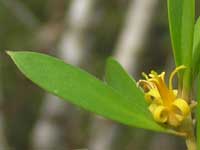
Lance Leaf Geebung
Persoonia lanceolata
Similar to P. glaucescens - but that species is restricted to the Picton/Berrima area.
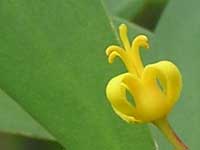
Broad-leaved Geebung
Persoonia levis
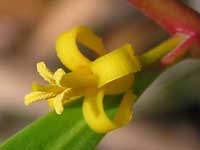
Broad-leaved Geebung
Persoonia levis
It is also called the Smooth Geebung, its younger branches are red.
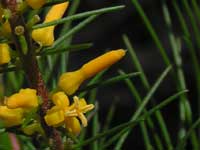
Pine-leaved Geebung
Persoonia pinifolia
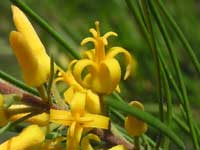
Narrow-leaved Geebung
Persoonia linearis
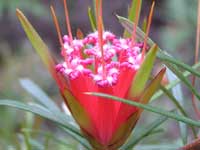
Mountain Devil
Lambertia formosa
Also see our Mountain Devil web page.
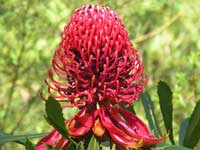
NSW Waratah
Telopea speciosissima
Waratah is aboriginal for "beautiful"; Telopea is Greek for "seen from afar".
Also see our Waratah web page.
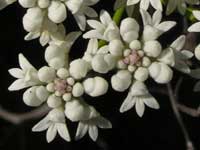
Long Leaf Smoke Bush
Conospermum longifolium ssp. longifolium
The ssp. angustifolium's leaves are not wide towards the end.

ABN 76 425 202 457